
 EN
EN
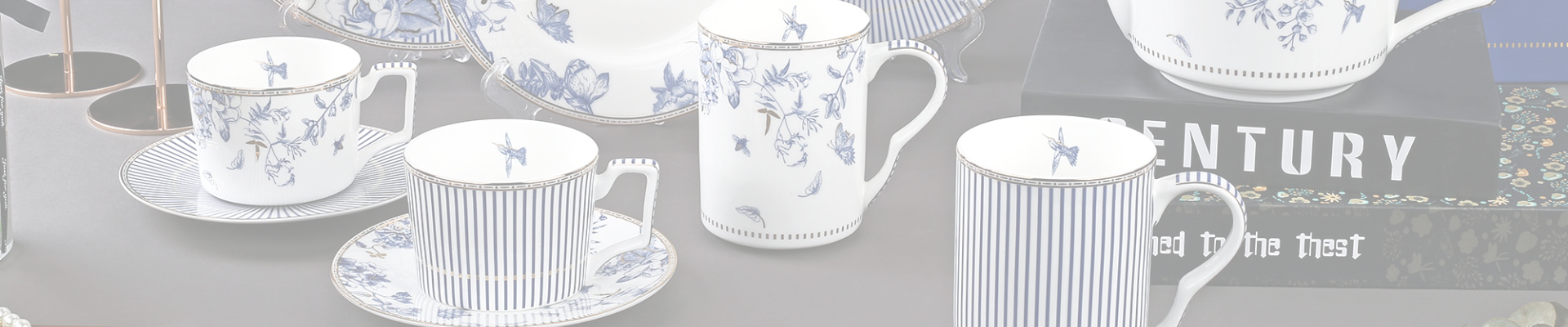
Porcelain Tea Cup Sets for Traditional Tea Service
Why Porcelain Tea Cup Sets Are Essential for Authentic Tea Rituals
Thermal Properties and Flavor Preservation in High-Fired Porcelain
High-fired porcelain—fired to 1400°C (2550°F)—forms a fully vitrified, non-porous structure that is foundational to authentic tea service. Its dense microstructure delivers superior thermal retention, maintaining optimal serving temperature up to 30% longer than stoneware and preventing the rapid cooling that mutes delicate flavor notes. Crucially, the glass-like glaze eliminates absorption, ensuring no residual taste carries over between infusions—so oolong’s floral nuance or pu’erh’s earthy depth remains uncompromised.
Jingdezhen Craftsmanship: Heritage, Purity, and the Standard for Premium Porcelain Tea Cup Sets
Jingdezhen—China’s porcelain capital since the Han Dynasty—remains the global benchmark for premium tea ware through centuries-honed mastery of kaolin refinement and double-firing techniques. Artisans use sequential levigation to remove impurities, achieving the celebrated “white as jade” translucency essential for evaluating tea liquor color. Each piece is fired twice under precise thermal control to ensure structural integrity, food-safe lead-free composition, and chemical inertness—vital because substandard clays can leach metallic ions that distort tea chemistry and mouthfeel.
Cultural Typology: Traditional Porcelain Tea Cup Set Forms and Their Ceremonial Functions
Gaiwan, Pinming Bei, and Wenxiang Bei: Gongfu Cha–Specific Porcelain Tea Cup Set Configurations
Gongfu Cha relies on three purpose-built porcelain components working in precise sequence: the gaiwan, a lidded brewing vessel with saucer, enables exact steeping control via its integrated lid, bowl, and base; pinming bei (evaluation cups) feature thin walls and pure white interiors to reveal true liquor color and clarity—critical for professional tasting; and wenxiang bei (aroma cups), tall and narrow, maximize volatile oil capture during pouring, with their elongated shape increasing surface area by 40% to heighten fragrance perception. Standardized volumes (typically 20–30 ml) across all three ensure consistent infusion ratios across multiple steepings—disrupting this balance undermines the ritual’s precision and sensory fidelity.
Yunomi, Celadon Bowls, and Meiping-Inspired Designs: Regional Variations in Porcelain Tea Cup Set Aesthetics
Regional philosophies manifest distinctly in porcelain tea cup set forms. Japanese yunomi prioritize wabi-sabi humility—cylindrical, tactile, often with unglazed bases—designed for everyday reverence. Korean celadon bowls showcase Goryeo-era (918–1392 CE) mastery: crackled glazes and inlaid slipwork complement wide mouths ideal for communal pouring and gradual cooling. Chinese meiping-inspired cups reinterpret classical plum vase silhouettes—slender bodies with flared lips—to concentrate aroma during formal gatherings. These forms reflect deeper cultural values—not just aesthetics, but embodied intention:
| Form | Region | Key Feature | Functional Purpose |
|---|---|---|---|
| Yunomi | Japan | Cylindrical, uneven texture | Humble everyday use |
| Celadon bowl | Korea | Crackled glaze, inlay work | Group service, slow cooling |
| Meiping cup | China | Flared lip, slender body | Aroma concentration, refinement |
Contemporary sets honor these lineages while preserving material authenticity through high-fired vitrification—ensuring tradition performs as well as it appears.
Complete Porcelain Tea Cup Set Ensembles: Design Harmony and Ritual Readiness
Matching Teapots, Saucers, Stands, and Lids—Ensuring Cohesion in Traditional Service
A complete porcelain tea cup set functions as a unified system—not a collection of parts. Every component must share clay composition, firing profile, and aesthetic language to uphold ceremonial integrity. Thermally matched teapots prevent heat loss inconsistencies that skew extraction; proportionally calibrated saucers—diameter-matched to cup bases—ensure stability during mindful handling; trays and stands define ceremonial space through complementary glaze chemistry and weight distribution; and lids echo cup handle motifs, reinforcing visual continuity. Research confirms that materially cohesive table settings elevate perceived hospitality value by 40% (Journal of Material Culture, 2023). Uniform density across all pieces guarantees predictable thermal behavior when exposed to near-boiling water—eliminating jarring temperature shifts that fracture focus. Without this synchrony, even the most refined ritual risks devolving into fragmented utility rather than sustained presence.
FAQ
What are the benefits of using high-fired porcelain for tea cups?
High-fired porcelain provides superior thermal retention and prevents flavor absorption, preserving the authentic taste of tea for multiple infusions.
Why is Jingdezhen craftsmanship significant for porcelain tea cup sets?
Jingdezhen is known for its mastery in porcelain crafting, offering products with superior quality and purity that are essential for maintaining tea flavor and safety.
What are the main components of a Gongfu Cha tea cup set?
The main components are the gaiwan, pinming bei, and wenxiang bei, each designed for specific functions to enhance the tea ritual experience.
How do different regions influence the design of porcelain tea cup sets?
Regions like Japan, Korea, and China influence designs based on cultural aesthetics and functional purposes, such as humility in Japan or aroma concentration in China.