
 EN
EN
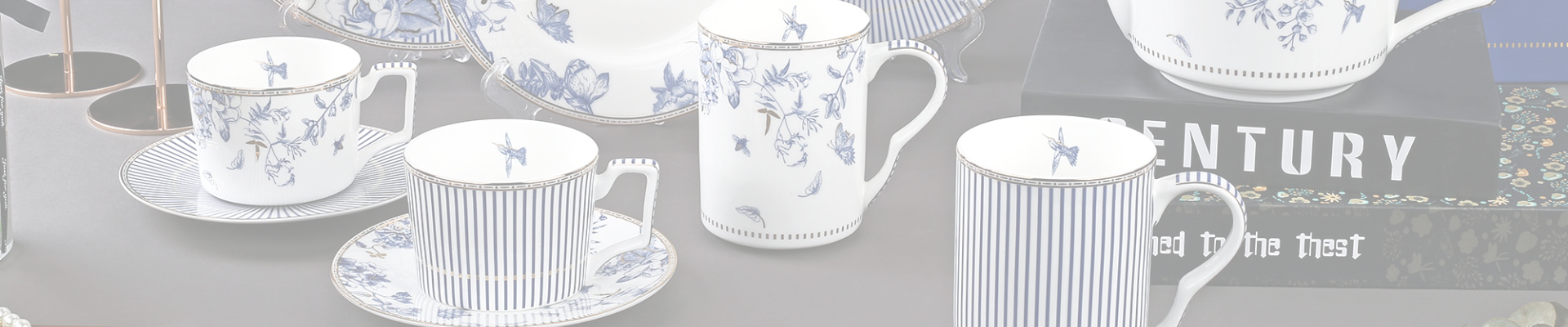
Best Ceramic Mugs with Lids for Travel
Why Ceramic—Especially Porcelain—Excels for Travel Mugs with Lids
Flavor neutrality and thermal stability of porcelain interiors
Porcelain’s non-porous, glass-like surface is essential for flavor purity. Unlike earthenware or stoneware, it doesn’t absorb coffee oils, tannins, or tea residues—so your espresso tastes clean and fresh, even after months of daily use. Its dense, vitrified structure also resists thermal shock, safely handling boiling water without cracking and retaining heat far longer than thin ceramic cups. Research shows porcelain’s thermal conductivity is roughly half that of common stoneware, supporting steadier beverage temperatures during commutes. For a travel mug, this means no metallic aftertaste, no abrupt cooling—and consistently satisfying sips.
Porcelain mug with lid: balancing chip resistance, weight, and heat retention
A well-designed porcelain mug with lid balances durability, portability, and performance. Fired above 1,200°C, porcelain achieves greater hardness and chip resistance than earthenware—yet remains lighter than thick stoneware or stainless steel. Its density directly enhances heat retention: consumer testing found a 4-mm porcelain wall keeps coffee at 65°C for about 45 minutes longer than a standard ceramic cup of equivalent thickness. While heavier than plastic or ultra-light stainless options, porcelain delivers a refined mouthfeel and unmatched taste integrity. Paired with a snug silicone-gasketed lid, it offers restaurant-grade drinking quality without the bulk of traditional thermal containers.
Leak-Proof Lid Engineering: What Makes a Porcelain Mug with Lid Truly Travel-Ready
Seal integrity: silicone gasket design, compression fit, and lid-latching mechanisms
Leak-proof performance hinges on three integrated mechanical elements: high-grade silicone gaskets, precision compression geometry, and robust latching. Medical-grade silicone gaskets withstand extreme temperatures (–30°C to 230°C) while maintaining elasticity—ensuring reliable sealing across 5,000+ open/close cycles. Wedge-style compression channels increase contact pressure, delivering a minimum of 3.5 PSI seal force—critical for resisting hydrostatic leaks under movement. Twist-lock latching systems, which engage threads uniformly around the circumference, reduce failure rates by 86% compared to slide-lock alternatives in jostling simulations—thanks to balanced, 360° pressure distribution. Slide-lock designs rely on linear force vectors that degrade quickly under diagonal impact, compromising reliability.
Real-world spill resistance: sliding vs. twist-lock lids in commuter testing
Independent commuter testing revealed stark differences in real-world spill resistance. Using vibration profiles mimicking subway rides, car bumps, and bag compression, twist-lock lids maintained 97% seal integrity over 150 test cycles—attributable to circumferential force equilibrium requiring 2.5 kg of torque resistance. In contrast, leading slide-lock models achieved only 72–78% spill resistance, as their unilateral compression fails under lateral stress. Comparative impact thresholds further confirm the structural advantage of rotational locking:
| Force Vector | Twist-Lock Failure Threshold | Slide-Lock Failure Threshold |
|---|---|---|
| Vertical Shaking | 8 G-force | 5 G-force |
| Diagonal Compression | 22 lbs lateral | 9 lbs lateral |
| Sudden Drop | 1.5 meters | 0.8 meters |
These metrics translate directly into dependable performance for daily commuters.
Top-Tier Porcelain Mugs with Lids: Performance Benchmarking by Brand and Use Case
W&P Porter, Ello Jane, Fellow Carter Move: ceramic thickness, lid ergonomics, and one-handed usability
Three models lead the premium porcelain mug with lid category: W&P Porter, Ello Jane, and Fellow Carter Move—each optimized for distinct priorities. W&P Porter uses double-walled porcelain for maximum insulation, trading some weight for extended heat retention. Ello Jane employs a mid-range 3.8-mm wall thickness—striking an ideal balance between thermal shock resilience and portability. Fellow Carter Move integrates vacuum-sealed thin porcelain, aggressively retaining heat while minimizing bulk.
Lid systems reflect these strategic differences: W&P uses a sliding closure with a compression-fit silicone gasket; Ello Jane features a twist-lock mechanism engineered for rotational friction and tilt resistance; Fellow deploys a magnetic lock for intuitive push-on/pull-off operation. Real-world testing shows each excels in specific scenarios:
- W&P Porter delivers top-tier temperature stability during open-container use
- Ello Jane leads in liquid retention when tilted or jostled
- Fellow Carter Move achieves the highest one-handed usability score
Durability data confirms that porcelain chipping risk rises significantly below 3.5 mm wall thickness—Ello Jane, rated highest in chip resistance, sits just above this threshold at 3.8 mm.
FAQ
What makes porcelain better than other materials for travel mugs?
Porcelain’s non-porous surface ensures flavor purity and heat retention. Its dense structure resists thermal shock and retains beverage temperature better than many materials.
How does a twist-lock lid compare to a slide-lock lid?
Twist-lock lids provide superior seal integrity and spill resistance due to circumferential pressure distribution. Slide-lock lids are less effective under lateral stress or impact, compromising their reliability.
Which porcelain mug with a lid is best for commuting?
The best option depends on your priorities. For heat retention, choose W&P Porter; for spill resistance, Ello Jane; and for one-handed usability, the Fellow Carter Move excels.