
 EN
EN
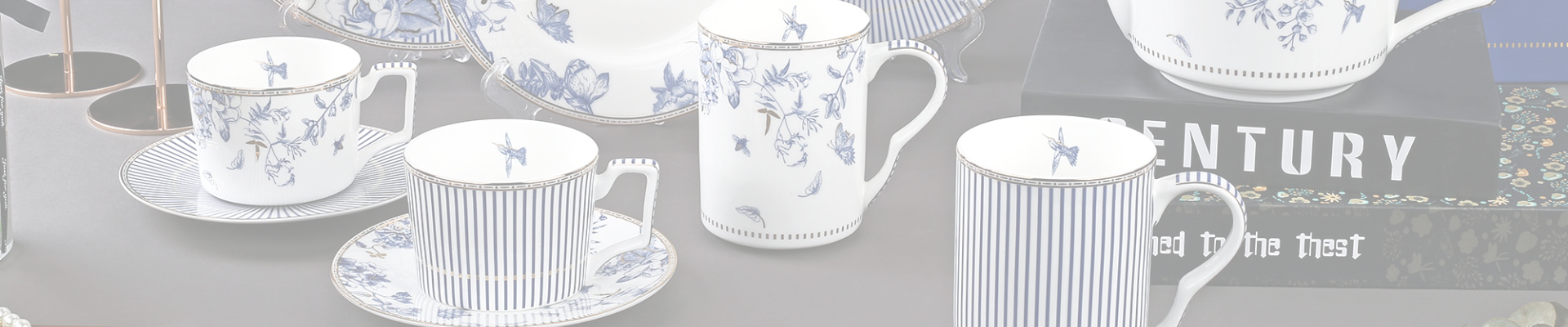
Best Porcelain Tea Sets for Collectors and Families
Understanding Porcelain Tea Set Materials: Hard-Paste, Soft-Paste, and Bone China
Chemical Composition and Firing Profiles of Key Porcelain Types
The durability and aesthetic qualities of a porcelain tea set hinge on its material composition and firing process. True hard-paste porcelain—originating in China and later replicated in Europe—combines kaolin, feldspar, and quartz, then fires at 1300–1400°C (2400–2550°F). This yields exceptional strength, chip resistance, and thermal stability—critical for repeated brewing and daily use.
Soft-paste porcelain, developed in 17th- and 18th-century Europe as an attempt to emulate Chinese imports, uses glassy frits or clay blends fired at lower temperatures (~1200°C / 2200°F). Its softer structure makes it more prone to scratching, staining, and thermal shock—limiting its suitability for functional tea service today.
Bone china, pioneered by English manufacturers like Spode in the late 18th century, incorporates at least 25–30% bone ash into a kaolin-feldspar base. Though fired at lower temperatures (bisque: 1200–1250°C; glost: 1000–1100°C), its microstructure delivers superior translucency, resilience, and impact resistance. The resulting warm ivory-white tone and fine, lightweight profile combine elegance with practicality—making it the benchmark for premium porcelain tea sets.
Why English Bone China Dominates Collector Demand for Porcelain Tea Sets
English bone china commands enduring collector demand not only for its historical significance but for its unmatched functional balance. Its unique mineral chemistry enables thinner walls without sacrificing strength—ideal for delicate teacups that retain heat efficiently and remain comfortable to hold. Unlike some glazed porcelains, properly formulated bone china features neutral, non-reactive surfaces that preserve tea’s aroma and flavor integrity—especially valued in connoisseur circles.
Its warm, luminous hue also distinguishes it aesthetically from cooler-toned hard-paste porcelains, while its proven longevity—evidenced by intact 200-year-old services still in rotation—reinforces trust in its craftsmanship. Top-tier manufacturers continue to adhere to these time-tested formulations, ensuring consistency across generations. As a result, bone china remains the gold standard for both daily use and serious collecting—where elegance, performance, and heritage converge.
Top Heritage Brands in Porcelain Tea Set Manufacturing
Spode, Minton, and Royal Worcester: Pattern Legacy and Backstamp Authentication
Three Staffordshire names define the pinnacle of English porcelain tea ware: Spode, Minton, and Royal Worcester. Spode perfected the commercial production of bone china around 1800, establishing the formula—kaolin, bone ash, and feldspar—that became the industry standard for strength and translucency. Minton distinguished itself through botanical and narrative transfer-printed patterns, many derived from Royal Botanic Gardens illustrations, offering rich detail at scale. Royal Worcester excelled in sculptural innovation, notably with its “Blind Earl” rose motif and distinctive bottle-shaped teapots, often enhanced with hand-gilded rims and intricate molded handles.
Authentication begins with the backstamp. Spode marks typically feature a printed crown with “Spode” in script or block lettering; Minton used an ermine shield beneath a crown; Royal Worcester employed a crescent-and-51 mark (denoting its Worcester location). A full, legible backstamp across all pieces significantly bolsters provenance—while chips, restoration, or missing marks can reduce value by 30–50%. Complete sets bearing consistent, era-appropriate stamps represent the highest tier of desirability among collectors.
Chelsea, Derby, and Royal Doulton: Rarity Signals and Signature Aesthetics in Vintage Porcelain Tea Sets
Beyond Staffordshire, Chelsea, Derby, and Royal Doulton offer distinct rarity markers and stylistic signatures. Chelsea porcelain—produced from the 1740s—is among the rarest English soft-paste wares, prized for asymmetrical floral painting and delicate modeling. Its early “red anchor” mark (a small red anchor within a triangle) signals pre-1770 production and commands premiums four to six times higher than later “gold anchor” examples.
When Chelsea closed in 1784, Derby acquired many of its molds and artists, evolving the aesthetic into Crown Derby—adding formal gilding, refined symmetry, and deeper cobalt blues. Authentic Derby pieces bear a printed “D” crowned with “Derby” in a straight line; 20th-century reproductions often omit this precision.
Royal Doulton entered the market later (founded 1815, expanded into fine china in the 1880s) but built collector appeal through character-driven lines—most notably the “Bunnykins” nursery service and “Toby” jugs. While charming and widely collected, these rarely match the auction heights of Chelsea or early Royal Worcester. A pristine Chelsea floral tea service can exceed $5,000 at auction; comparably conditioned Royal Doulton character sets from the 1930s typically fall below $800—underscoring how rarity, age, and technical achievement shape valuation.
Evaluating Vintage Porcelain Tea Sets: Condition, Completeness, and Provenance
The 3-Point Integrity Check: Gilding Wear, Hairline Cracks, and Matching Backstamps
A rigorous evaluation of any vintage porcelain tea set rests on three interdependent criteria: surface integrity, structural soundness, and documented origin. First, inspect gilt decoration under angled light—over 30% wear indicates significant age-related degradation and diminishes both aesthetic and monetary value. Second, test for hairline cracks using the water test: lightly dampen the piece and observe under magnification—tension from evaporation often reveals hidden fractures that compromise functionality and can slash value by up to 60%. Third, verify matching maker’s marks across every component. Mismatched or absent backstamps suggest replacement pieces, undermining authenticity and reducing resale value by as much as 75% compared to fully matched sets.
While minor glaze crazing or faint discoloration may be acceptable in older pieces, prioritize flaws affecting usability or verifiable provenance. Auction professionals consistently emphasize that structural integrity and documented manufacturing lineage carry far greater weight than superficial imperfections when determining long-term collectibility and investment merit.
Valuing Your Porcelain Tea Set: Maker, Pattern, and Market Benchmarking
How Auction Results and Collector Demand Shape Real-Time Porcelain Tea Set Pricing
Real-world valuation of a porcelain tea set is best anchored in recent auction data—not outdated price guides or subjective appraisals. When a rare pattern from a top-tier maker sells above estimate—such as a complete Royal Worcester “Blind Earl” service achieving £12,500 at Bonhams—it resets market expectations across dealer networks and online platforms. Conversely, repeated reserve failures signal weakening interest, prompting downward adjustments.
Three factors drive these fluctuations: maker prestige (e.g., Spode vs. lesser-known regional producers), pattern scarcity (discontinued or low-production runs command premiums), and active bidder competition (reflected in sell-through rates and bid depth). For instance, a 12-place Royal Worcester setting in a discontinued floral pattern routinely fetches 40% more than the same pattern missing just two cups—highlighting how completeness amplifies value disproportionately. Sellers who consult results from major houses like Sotheby’s, Christie’s, and Woolley & Wallis gain actionable benchmarks for pricing, insurance, or estate planning—ensuring decisions are grounded in current, evidence-based market intelligence.
FAQ Section
What is the difference between hard-paste, soft-paste, and bone china?
Hard-paste porcelain is made from kaolin, feldspar, and quartz and fired at very high temperatures, making it durable and thermally stable. Soft-paste porcelain uses different clay blends and is fired at lower temperatures, making it softer and less durable. Bone china incorporates bone ash, offering translucency, resilience, and an elegant appearance.
Why is English bone china so highly regarded?
English bone china features a unique blend of strength, translucency, and fine craftsmanship. It is lightweight yet durable, designed to preserve tea’s aroma and flavor. Its warm ivory hue adds to its visual appeal.
How can I identify authentic porcelain tea sets from heritage brands?
Look for maker backstamps. Spode has a crown and the name “Spode,” Minton uses an ermine shield, and Royal Worcester features a crescent and location mark. Consistent and fully legible marks are critical for authentication.
How do collectors evaluate the value of a porcelain tea set?
Collectors assess value based on maker prestige, rarity, and set completeness. Auction results and condition factors such as gilding wear, hairline cracks, and matching backstamps also play critical roles in valuation.
What diminishes the value of a vintage porcelain tea set?
Factors such as mismatched maker marks, hairline cracks, worn gilding, and incomplete sets can significantly reduce the value of a vintage tea set, with severe defects slashing value by up to 75%.