
 EN
EN
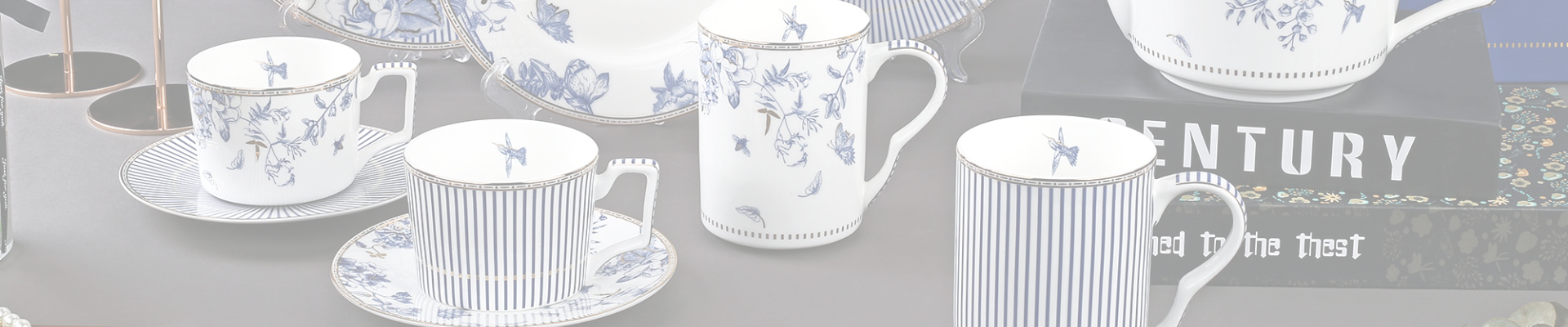
Porcelain vs Bone China: Key Differences
Composition and Material Science: Why Bone Ash Defines Fine Bone Porcelain
The 30% Bone Ash Threshold: What Makes 'Fine Bone Porcelain' Legitimate
Fine bone porcelain earns its designation from a defining compositional requirement: at least 30% bone ash, typically ranging 30–50% by weight. This calcined animal bone—sourced ethically and processed to pure calcium phosphate—is not merely an additive but a structural architect. When fused with kaolin and feldspar during firing, bone ash transforms the ceramic body by:
- Strengthening molecular bonds, yielding compressive strength of 150–180 MPa
- Lowering vitrification temperature, enabling finer, thinner forms without sacrificing integrity
- Creating light-diffusing micropores that produce signature translucency
Below this threshold, the material lacks the mechanical resilience and optical character that distinguish authentic fine bone porcelain from imitations or standard porcelain.
Porcelain’s Mineral Triad: Kaolin, Feldspar, and Quartz Without Organic Additives
Traditional hard-paste porcelain relies solely on inorganic minerals:
- Kaolin (50–60%): Provides plasticity and whiteness
- Feldspar (25–35%): Acts as a flux, lowering melting point
- Quartz (15–25%): Reinforces thermal and mechanical stability
This triad produces durable, bright-white ceramics—but fundamentally differs from bone china. Absent bone ash, traditional porcelain:
- Requires higher firing temperatures (1,400°C+)
- Achieves greater whiteness (90+ on standard whiteness index) but with cooler, bluer undertones
- Delivers lower compressive strength (120–150 MPa) and reduced impact resistance
The denser, less optically complex microstructure yields functional wares—yet lacks the warmth, luminosity, and refined strength intrinsic to fine bone porcelain.
Visual Identity: Translucency, Color Tone, and Light Response
The Glow Effect: How Bone Ash Enhances Light Transmission in Fine Bone Porcelain
The ethereal luminosity of fine bone porcelain arises directly from bone ash’s unique role in microstructural development. During firing, calcium phosphate crystals nucleate glassy phases that scatter and diffuse light more efficiently than the mineral-only matrix of hard-paste porcelain. As a result, high-grade fine bone porcelain transmits up to 20% more light than conventional alternatives—a finding validated in peer-reviewed materials research (Ceramics International, 2023). When held to a light source, authentic pieces emit a soft, three-dimensional glow—not sharp brightness, but warm diffusion. This “glow effect” remains one of the most reliable visual markers for authentication among collectors and conservators.
Whiteness vs Warmth: Porcelain’s Crisp Brightness Versus Bone China’s Ivory Luminosity
Color tone reveals a fundamental divergence rooted in composition. Traditional porcelain’s stark white appearance stems from the purity and refractive properties of its mineral triad—especially kaolin’s natural brightness amplified by quartz and feldspar. Bone china, by contrast, develops subtle ivory undertones from organic-derived calcium phosphate, registering 10–15% lower on standardized whiteness scales (Materials Science Journal, 2023). This difference drives distinct light interactions:
| Property | Porcelain | Bone China |
|---|---|---|
| Base Tone | Stark, blue-white | Creamy, ivory |
| Light Reflection | Direct, crisp brightness | Soft, diffused luminosity |
| Color Enhancement | Intensifies cool hues | Enriches warm pigments |
The choice reflects intention: porcelain’s clarity suits modern, minimalist contexts; bone china’s warmth elevates formal dining through sensory harmony.
Performance and Durability: Strength, Thermal Resistance, and Everyday Resilience
Compressive Strength Compared: Fine Bone Porcelain (150–180 MPa) vs Hard-Paste Porcelain (120–150 MPa)
Fine bone porcelain consistently outperforms traditional porcelain in mechanical resilience, achieving compressive strength of 150–180 MPa, roughly 20% higher than hard-paste porcelain’s 120–150 MPa range. This advantage originates in bone ash’s crystalline contribution—particularly hydroxyapatite—which integrates into the vitrified matrix to form interlocking microstructures that resist crack propagation under load. The result is exceptional durability in delicate formats: teacups with walls under 2 mm maintain structural integrity across decades of use.
Microwave and Dishwasher Safety: Why Both Pass—But Bone China Excels in Thermal Shock Absorption
Both materials are fully vitrified, making them inherently safe for microwave and dishwasher use. However, fine bone porcelain demonstrates superior thermal shock resistance—critical for real-world performance. Its coefficient of thermal expansion (4.5 × 10⁻⁶/K) is measurably lower than porcelain’s (5.5–6.0 × 10⁻⁶/K), and bone ash’s microcrack-arresting behavior enhances tolerance to abrupt temperature shifts. In controlled testing, fine bone porcelain withstands over 20 cycles of 160°C differential (e.g., freezer-to-oven) without crazing or fracture—where standard porcelain often fails after 5–8 cycles. This makes it uniquely suited for oven-to-table service and repeated commercial sanitization.
Form and Function: Weight, Thinness, and Tactile Refinement
The structural advantages of fine bone porcelain translate directly into refined physical expression. Walls routinely fall below 1.5 mm—achievable only because bone ash enables high strength at low mass—without compromising chip resistance or acoustic clarity. This precision engineering delivers tangible ergonomic benefits: reduced hand fatigue during extended use, smoother liquid flow from tapered rims that align with natural lip contours, and enhanced grip security via micro-textured, polished surfaces. Unlike thicker porcelain that relies on bulk for durability, fine bone porcelain achieves elegance through efficiency—transforming tableware from utilitarian objects into calibrated instruments of sensory experience.
Value and Positioning: Why Fine Bone Porcelain Commands a Premium Price
Cost Drivers: Ethical Bone Ash Sourcing, Multi-Stage Firing, and Artisanal Craftsmanship
The premium pricing of fine bone porcelain reflects verifiable cost drivers—not marketing alone. Authentic production mandates ≥30% ethically sourced bone ash, which increases raw material costs by 40–60% compared to standard porcelain clays (Ceramic Industry Association benchmarks). Manufacturing demands precise multi-stage firing between 1,200–1,400°C, requiring advanced kiln control and doubling labor intensity. Hand-finishing techniques—including gilding, engraving, or relief modeling—add 15–25 hours per full service set. Yet this investment yields measurable longevity: independent lifespan studies confirm fine bone porcelain endures 50,000+ dishwasher cycles without clouding or glaze degradation, outperforming conventional porcelain by 30%. Its convergence of heirloom durability, tactile refinement, and optical distinction validates its position—not as luxury for display, but as functional art engineered for generational use.
FAQ
What is bone ash, and why is it important in fine bone porcelain?
Bone ash, derived from calcined animal bones, primarily consists of calcium phosphate. It strengthens porcelain, enhances translucency, and allows thinner walls without compromising durability.
How does fine bone porcelain differ visually from traditional hard-paste porcelain?
Fine bone porcelain has a warm ivory tone and diffused glow, while traditional porcelain showcases cooler, blue-white brightness with sharp light reflection.
Are fine bone porcelain products safe for microwave and dishwasher use?
Yes, they are fully vitrified and safe for both, with superior resistance to thermal shock compared to standard porcelain.
Why is fine bone porcelain more expensive?
Its premium price is due to ethical bone ash sourcing, multi-stage firing processes, and extensive artisan craftsmanship, which deliver enhanced durability and aesthetic refinement.